Trench-less pipe install using Ditch Witch HammerHead Mole
Trench-less pipe installation with a Ditch Witch HammerHead mole is an efficient, minimally invasive method for replacing or installing underground pipes without extensive excavation. The HammerHead mole (also known as a pneumatic or hydraulic mole) is a specialty tool that creates a bore through soil using percussive action, allowing new pipe to be pulled through the created sleeve or inserted directly behind the mole.
Faster completion: less digging speeds up the project timeline.
Lower restoration costs: reduced need for repaving or landscaping repairs.
Safer around utilities: smaller entry and exit pits reduce exposure to other underground utilities when properly located.
Versatile: effective for short to moderate distances and a variety of soil types (better in cohesive soils and less rocky ground).
Typical process
Site assessment and utility locate: mark all underground utilities and evaluate soil conditions to confirm the job is suitable for a mole installation.
Pit excavation: dig small entry and exit pits at the starting and ending points of the bore.
Setup and alignment: position the HammerHead mole and align the bore path between pits.
Bore and pipe installation: operate the mole to create the bore while simultaneously pulling or feeding new pipe (usually polyethylene or similar flexible pipe) into place.
Connection and testing: connect the new pipe to existing plumbing, pressure-test or flow-test for leaks, and make necessary adjustments.
Backfill and clean-up: fill the pits, compact soil, and restore the site with minimal landscaping work.
When to use a HammerHead mole
Replacing a damaged pipe under a driveway, sidewalk, patio, or lawn.
Installing utility service lines where trenching would be impractical or cost-prohibitive.
Short runs (commonly up to a few dozen feet), especially in soils without large obstructions.
Limitations and considerations
Soil conditions: very rocky soils, large boulders, or dense clay can impede or damage the mole and reduce effectiveness.
Distance and line of sight: longer runs or complex bends may require alternative trench-less methods (directional boring or pipe bursting).
Pipe size: best suited for smaller-diameter lines (water service, sewer laterals, gas lines within certain sizes).
Professional assessment required: a licensed plumber or contractor should evaluate site-specific factors and obtain necessary permits.
If you need trench-less pipe installation in Austin, TX, contact Al Mac Plumbing & Gas LLC for a professional site evaluation and recommendation on whether a Ditch Witch HammerHead mole is the right solution for your project.
Trench-less pipe install using Ditch Witch HammerHead Mole
Trench-less pipe installation with a Ditch Witch HammerHead mole is an efficient, minimally invasive method for replacing or installing underground pipes without extensive excavation. The HammerHead mole (also known as a pneumatic or hydraulic mole) is a specialty tool that creates a bore through soil using percussive action, allowing new pipe to be pulled through the created sleeve or inserted directly behind the mole.
Faster completion: less digging speeds up the project timeline.
Lower restoration costs: reduced need for repaving or landscaping repairs.
Safer around utilities: smaller entry and exit pits reduce exposure to other underground utilities when properly located.
Versatile: effective for short to moderate distances and a variety of soil types (better in cohesive soils and less rocky ground).
Typical process
Site assessment and utility locate: mark all underground utilities and evaluate soil conditions to confirm the job is suitable for a mole installation.
Pit excavation: dig small entry and exit pits at the starting and ending points of the bore.
Setup and alignment: position the HammerHead mole and align the bore path between pits.
Bore and pipe installation: operate the mole to create the bore while simultaneously pulling or feeding new pipe (usually polyethylene or similar flexible pipe) into place.
Connection and testing: connect the new pipe to existing plumbing, pressure-test or flow-test for leaks, and make necessary adjustments.
Backfill and clean-up: fill the pits, compact soil, and restore the site with minimal landscaping work.
When to use a HammerHead mole
Replacing a damaged pipe under a driveway, sidewalk, patio, or lawn.
Installing utility service lines where trenching would be impractical or cost-prohibitive.
Short runs (commonly up to a few dozen feet), especially in soils without large obstructions.
Limitations and considerations
Soil conditions: very rocky soils, large boulders, or dense clay can impede or damage the mole and reduce effectiveness.
Distance and line of sight: longer runs or complex bends may require alternative trench-less methods (directional boring or pipe bursting).
Pipe size: best suited for smaller-diameter lines (water service, sewer laterals, gas lines within certain sizes).
Professional assessment required: a licensed plumber or contractor should evaluate site-specific factors and obtain necessary permits.
If you need trench-less pipe installation in Austin, TX, contact Al Mac Plumbing & Gas LLC for a professional site evaluation and recommendation on whether a Ditch Witch HammerHead mole is the right solution for your project.
PRIVACY POLICY
Last updated March 30, 2026
This Privacy Notice for Al Mac Plumbing & Gas LLC ("we," "us," or "our"), describes how and why we might access, collect, store, use, and/or share ("process") your personal information when you use our services ("Services"), including when you:
Engage with us in other related ways, including any marketing or events
Questions or concerns? Reading this Privacy Notice will help you understand your privacy rights and choices. We are responsible for making decisions about how your personal information is processed. If you do not agree with our policies and practices, please do not use our Services. If you still have any questions or concerns, please contact us at almac.atx@gmail.com.
SUMMARY OF KEY POINTS
This summary provides key points from our Privacy Notice, but you can find out more details about any of these topics by clicking the link following each key point or by using our table of contents below to find the section you are looking for.
What personal information do we process? When you visit, use, or navigate our Services, we may process personal information depending on how you interact with us and the Services, the choices you make, and the products and features you use. Learn more about personal information you disclose to us.
Do we process any sensitive personal information? Some of the information may be considered "special" or "sensitive" in certain jurisdictions, for example your racial or ethnic origins, sexual orientation, and religious beliefs. We do not process sensitive personal information.
Do we collect any information from third parties?We do not collect any information from third parties.
How do we process your information? We process your information to provide, improve, and administer our Services, communicate with you, for security and fraud prevention, and to comply with law. We may also process your information for other purposes with your consent. We process your information only when we have a valid legal reason to do so. Learn more about how we process your information.
In what situations and with which parties do we share personal information? We may share information in specific situations and with specific third parties. Learn more about when and with whom we share your personal information.
What are your rights? Depending on where you are located geographically, the applicable privacy law may mean you have certain rights regarding your personal information. Learn more about your privacy rights.
How do you exercise your rights? The easiest way to exercise your rights is by submitting a data subject access request, or by contacting us. We will consider and act upon any request in accordance with applicable data protection laws.
In Short:We collect personal information that you provide to us.
We collect personal information that you voluntarily provide to us when you register on the Services, express an interest in obtaining information about us or our products and Services, when you participate in activities on the Services, or otherwise when you contact us.
Personal Information Provided by You. The personal information that we collect depends on the context of your interactions with us and the Services, the choices you make, and the products and features you use. The personal information we collect may include the following:
names
phone numbers
email addresses
mailing addresses
contact preferences
Sensitive Information.We do not process sensitive information.
All personal information that you provide to us must be true, complete, and accurate, and you must notify us of any changes to such personal information.
2. HOW DO WE PROCESS YOUR INFORMATION?
In Short: We process your information to provide, improve, and administer our Services, communicate with you, for security and fraud prevention, and to comply with law. We may also process your information for other purposes with your consent.
We process your personal information for a variety of reasons, depending on how you interact with our Services, including:
To facilitate account creation and authentication and otherwise manage user accounts. We may process your information so you can create and log in to your account, as well as keep your account in working order.
To respond to user inquiries/offer support to users. We may process your information to respond to your inquiries and solve any potential issues you might have with the requested service.
3. WHEN AND WITH WHOM DO WE SHARE YOUR PERSONAL INFORMATION?
In Short: We may share information in specific situations described in this section and/or with the following third parties.
We may need to share your personal information in the following situations:
Business Transfers. We may share or transfer your information in connection with, or during negotiations of, any merger, sale of company assets, financing, or acquisition of all or a portion of our business to another company.
When we use Google Maps Platform APIs. We may share your information with certain Google Maps Platform APIs (e.g., Google Maps API, Places API). Google Maps uses GPS, Wi-Fi, and cell towers to estimate your location. GPS is accurate to about 20 meters, while Wi-Fi and cell towers help improve accuracy when GPS signals are weak, like indoors. This data helps Google Maps provide directions, but it is not always perfectly precise.
4. DO WE USE COOKIES AND OTHER TRACKING TECHNOLOGIES?
In Short: We may use cookies and other tracking technologies to collect and store your information.
We may use cookies and similar tracking technologies (like web beacons and pixels) to gather information when you interact with our Services. Some online tracking technologies help us maintain the security of our Services and your account, prevent crashes, fix bugs, save your preferences, and assist with basic site functions.
We also permit third parties and service providers to use online tracking technologies on our Services for analytics and advertising, including to help manage and display advertisements, to tailor advertisements to your interests, or to send abandoned shopping cart reminders (depending on your communication preferences). The third parties and service providers use their technology to provide advertising about products and services tailored to your interests which may appear either on our Services or on other websites.
To the extent these online tracking technologies are deemed to be a "sale"/"sharing" (which includes targeted advertising, as defined under the applicable laws) under applicable US state laws, you can opt out of these online tracking technologies by submitting a request as described below under section "DO UNITED STATES RESIDENTS HAVE SPECIFIC PRIVACY RIGHTS?"
Specific information about how we use such technologies and how you can refuse certain cookies is set out in our Cookie Notice.
Google Analytics
We may share your information with Google Analytics to track and analyze the use of the Services. The Google Analytics Advertising Features that we may use include: Google Analytics Demographics and Interests Reporting. To opt out of being tracked by Google Analytics across the Services, visit https://tools.google.com/dlpage/gaoptout. You can opt out of Google Analytics Advertising Features through Ads Settings and Ad Settings for mobile apps. Other opt out means include http://optout.networkadvertising.org/ and http://www.networkadvertising.org/mobile-choice. For more information on the privacy practices of Google, please visit the Google Privacy & Terms page.
5. DO WE OFFER ARTIFICIAL INTELLIGENCE-BASED PRODUCTS?
In Short: We offer products, features, or tools powered by artificial intelligence, machine learning, or similar technologies.
As part of our Services, we offer products, features, or tools powered by artificial intelligence, machine learning, or similar technologies (collectively, "AI Products"). These tools are designed to enhance your experience and provide you with innovative solutions. The terms in this Privacy Notice govern your use of the AI Products within our Services.
Our AI Products
Our AI Products are designed for the following functions:
AI bots
How We Process Your Data Using AI
All personal information processed using our AI Products is handled in line with our Privacy Notice and our agreement with third parties. This ensures high security and safeguards your personal information throughout the process, giving you peace of mind about your data's safety.
6. HOW LONG DO WE KEEP YOUR INFORMATION?
In Short: We keep your information for as long as necessary to fulfill the purposes outlined in this Privacy Notice unless otherwise required by law.
We will only keep your personal information for as long as it is necessary for the purposes set out in this Privacy Notice, unless a longer retention period is required or permitted by law (such as tax, accounting, or other legal requirements). No purpose in this notice will require us keeping your personal information for longer than the period of time in which users have an account with us.
When we have no ongoing legitimate business need to process your personal information, we will either delete or anonymize such information, or, if this is not possible (for example, because your personal information has been stored in backup archives), then we will securely store your personal information and isolate it from any further processing until deletion is possible.
7. DO WE COLLECT INFORMATION FROM MINORS?
In Short: We do not knowingly collect data from or market to children under 18 years of age.
We do not knowingly collect, solicit data from, or market to children under 18 years of age, nor do we knowingly sell such personal information. By using the Services, you represent that you are at least 18 or that you are the parent or guardian of such a minor and consent to such minor dependent’s use of the Services. If we learn that personal information from users less than 18 years of age has been collected, we will deactivate the account and take reasonable measures to promptly delete such data from our records. If you become aware of any data we may have collected from children under age 18, please contact us at almac.atx@gmail.com.
8. WHAT ARE YOUR PRIVACY RIGHTS?
In Short:You may review, change, or terminate your account at any time, depending on your country, province, or state of residence.
Withdrawing your consent: If we are relying on your consent to process your personal information, which may be express and/or implied consent depending on the applicable law, you have the right to withdraw your consent at any time. You can withdraw your consent at any time by contacting us by using the contact details provided in the section "HOW CAN YOU CONTACT US ABOUT THIS NOTICE?" below.
However, please note that this will not affect the lawfulness of the processing before its withdrawal nor, when applicable law allows, will it affect the processing of your personal information conducted in reliance on lawful processing grounds other than consent.
Account Information
If you would at any time like to review or change the information in your account or terminate your account, you can:
Contact us using the contact information provided.
Upon your request to terminate your account, we will deactivate or delete your account and information from our active databases. However, we may retain some information in our files to prevent fraud, troubleshoot problems, assist with any investigations, enforce our legal terms and/or comply with applicable legal requirements.
If you have questions or comments about your privacy rights, you may email us at almac.atx@gmail.com.
9. CONTROLS FOR DO-NOT-TRACK FEATURES
Most web browsers and some mobile operating systems and mobile applications include a Do-Not-Track ("DNT") feature or setting you can activate to signal your privacy preference not to have data about your online browsing activities monitored and collected. At this stage, no uniform technology standard for recognizing and implementing DNT signals has been finalized. As such, we do not currently respond to DNT browser signals or any other mechanism that automatically communicates your choice not to be tracked online. If a standard for online tracking is adopted that we must follow in the future, we will inform you about that practice in a revised version of this Privacy Notice.
California law requires us to let you know how we respond to web browser DNT signals. Because there currently is not an industry or legal standard for recognizing or honoring DNT signals, we do not respond to them at this time.
10. DO UNITED STATES RESIDENTS HAVE SPECIFIC PRIVACY RIGHTS?
In Short: If you are a resident of California, Colorado, Connecticut, Delaware, Florida, Indiana, Iowa, Kentucky, Maryland, Minnesota, Montana, Nebraska, New Hampshire, New Jersey, Oregon, Rhode Island, Tennessee, Texas, Utah, or Virginia, you may have the right to request access to and receive details about the personal information we maintain about you and how we have processed it, correct inaccuracies, get a copy of, or delete your personal information. You may also have the right to withdraw your consent to our processing of your personal information. These rights may be limited in some circumstances by applicable law. More information is provided below.
Categories of Personal Information We Collect
The table below shows the categories of personal information we have collected in the past twelve (12) months. The table includes illustrative examples of each category and does not reflect the personal information we collect from you. For a comprehensive inventory of all personal information we process, please refer to the section "WHAT INFORMATION DO WE COLLECT?"
Category
Examples
Collected
A. Identifiers
Contact details, such as real name, alias, postal address, telephone or mobile contact number, unique personal identifier, online identifier, Internet Protocol address, email address, and account name
NO
B. Personal information as defined in the California Customer Records statute
Name, contact information, education, employment, employment history, and financial information
YES
C. Protected classification characteristics under state or federal law
Gender, age, date of birth, race and ethnicity, national origin, marital status, and other demographic data
NO
D. Commercial information
Transaction information, purchase history, financial details, and payment information
NO
E. Biometric information
Fingerprints and voiceprints
NO
F. Internet or other similar network activity
Browsing history, search history, online behavior, interest data, and interactions with our and other websites, applications, systems, and advertisements
NO
G. Geolocation data
Device location
NO
H. Audio, electronic, sensory, or similar information
Images and audio, video or call recordings created in connection with our business activities
NO
I. Professional or employment-related information
Business contact details in order to provide you our Services at a business level or job title, work history, and professional qualifications if you apply for a job with us
NO
J. Education Information
Student records and directory information
NO
K. Inferences drawn from collected personal information
Inferences drawn from any of the collected personal information listed above to create a profile or summary about, for example, an individual’s preferences and characteristics
NO
L. Sensitive personal Information
NO
We may also collect other personal information outside of these categories through instances where you interact with us in person, online, or by phone or mail in the context of:
Receiving help through our customer support channels;
Participation in customer surveys or contests; and
Facilitation in the delivery of our Services and to respond to your inquiries.
We will use and retain the collected personal information as needed to provide the Services or for:
Category B - As long as the user has an account with us
We may disclose your personal information with our service providers pursuant to a written contract between us and each service provider. Learn more about how we disclose personal information to in the section, "WHEN AND WITH WHOM DO WE SHARE YOUR PERSONAL INFORMATION?"
We may use your personal information for our own business purposes, such as for undertaking internal research for technological development and demonstration. This is not considered to be "selling" of your personal information.
We have not disclosed, sold, or shared any personal information to third parties for a business or commercial purpose in the preceding twelve (12) months. Wewill not sell or share personal information in the future belonging to website visitors, users, and other consumers.
Your Rights
You have rights under certain US state data protection laws. However, these rights are not absolute, and in certain cases, we may decline your request as permitted by law. These rights include:
Right to know whether or not we are processing your personal data
Right to access your personal data
Right to correct inaccuracies in your personal data
Right to request the deletion of your personal data
Right to obtain a copy of the personal data you previously shared with us
Right to non-discrimination for exercising your rights
Right to opt out of the processing of your personal data if it is used for targeted advertising (or sharing as defined under California’s privacy law), the sale of personal data, or profiling in furtherance of decisions that produce legal or similarly significant effects ("profiling")
Depending upon the state where you live, you may also have the following rights:
Right to access the categories of personal data being processed (as permitted by applicable law, including the privacy law in Minnesota)
Right to obtain a list of the categories of third parties to which we have disclosed personal data (as permitted by applicable law, including the privacy law in California, Delaware, and Maryland)
Right to obtain a list of specific third parties to which we have disclosed personal data (as permitted by applicable law, including the privacy law in Minnesota and Oregon)
Right to obtain a list of third parties to which we have sold personal data (as permitted by applicable law, including the privacy law in Connecticut)
Right to review, understand, question, and depending on where you live, correct how personal data has been profiled (as permitted by applicable law, including the privacy law in Connecticut and Minnesota)
Right to limit use and disclosure of sensitive personal data (as permitted by applicable law, including the privacy law in California)
Right to opt out of the collection of sensitive data and personal data collected through the operation of a voice or facial recognition feature (as permitted by applicable law, including the privacy law in Florida)
How to Exercise Your Rights
To exercise these rights, you can contact us by submitting a data subject access request, by emailing us at almac.atx@gmail.com, or by referring to the contact details at the bottom of this document.
Under certain US state data protection laws, you can designate an authorized agent to make a request on your behalf. We may deny a request from an authorized agent that does not submit proof that they have been validly authorized to act on your behalf in accordance with applicable laws.
Request Verification
Upon receiving your request, we will need to verify your identity to determine you are the same person about whom we have the information in our system. We will only use personal information provided in your request to verify your identity or authority to make the request. However, if we cannot verify your identity from the information already maintained by us, we may request that you provide additional information for the purposes of verifying your identity and for security or fraud-prevention purposes.
If you submit the request through an authorized agent, we may need to collect additional information to verify your identity before processing your request and the agent will need to provide a written and signed permission from you to submit such request on your behalf.
Appeals
Under certain US state data protection laws, if we decline to take action regarding your request, you may appeal our decision by emailing us at almac.atx@gmail.com. We will inform you in writing of any action taken or not taken in response to the appeal, including a written explanation of the reasons for the decisions. If your appeal is denied, you may submit a complaint to your state attorney general.
11. DO WE MAKE UPDATES TO THIS NOTICE?
In Short: Yes, we will update this notice as necessary to stay compliant with relevant laws.
We may update this Privacy Notice from time to time. The updated version will be indicated by an updated "Revised" date at the top of this Privacy Notice. If we make material changes to this Privacy Notice, we may notify you either by prominently posting a notice of such changes or by directly sending you a notification. We encourage you to review this Privacy Notice frequently to be informed of how we are protecting your information.
12. HOW CAN YOU CONTACT US ABOUT THIS NOTICE?
If you have questions or comments about this notice, you may email us at almac.atx@gmail.com or contact us by post at:
Al Mac Plumbing & Gas LLC
10415 Old Manchaca RD
Austin, TX78748
United States
13. HOW CAN YOU REVIEW, UPDATE, OR DELETE THE DATA WE COLLECT FROM YOU?
Based on the applicable laws of your country or state of residence in the US, you may have the right to request access to the personal information we collect from you, details about how we have processed it, correct inaccuracies, or delete your personal information. You may also have the right to withdraw your consent to our processing of your personal information. These rights may be limited in some circumstances by applicable law. To request to review, update, or delete your personal information, please fill out and submit a data subject access request.
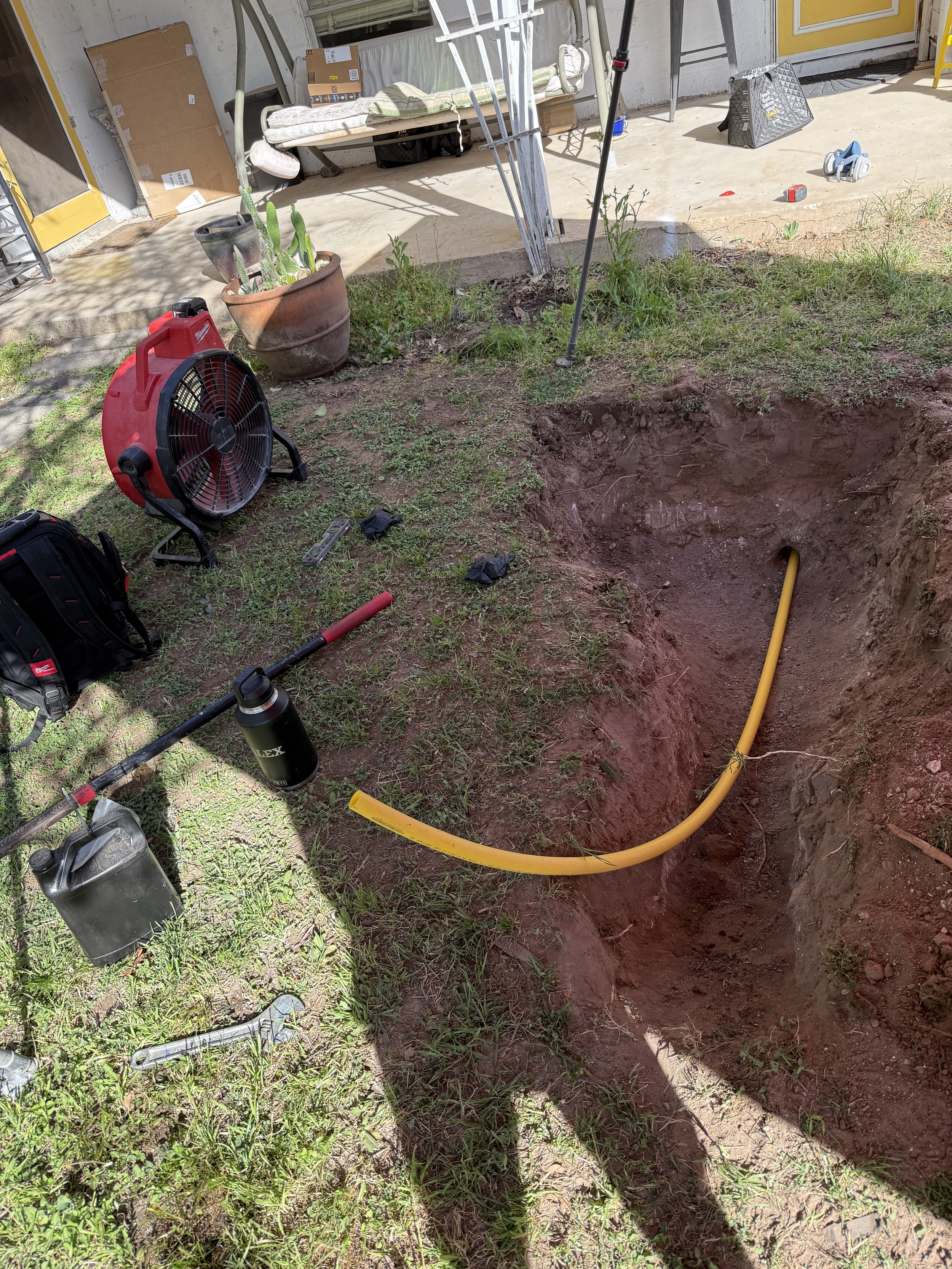 Image 1 of 1